Top 10 Differences Between a Sideboard and a Buffet?

Time:2026-05-03 Author:Aria
0%

Understanding the nuances between furniture pieces can elevate your home decor. Among these, sideboards and buffets often confuse many. What is the difference between a sideboard and a buffet? Both serve similar functions, but their designs and uses vary.

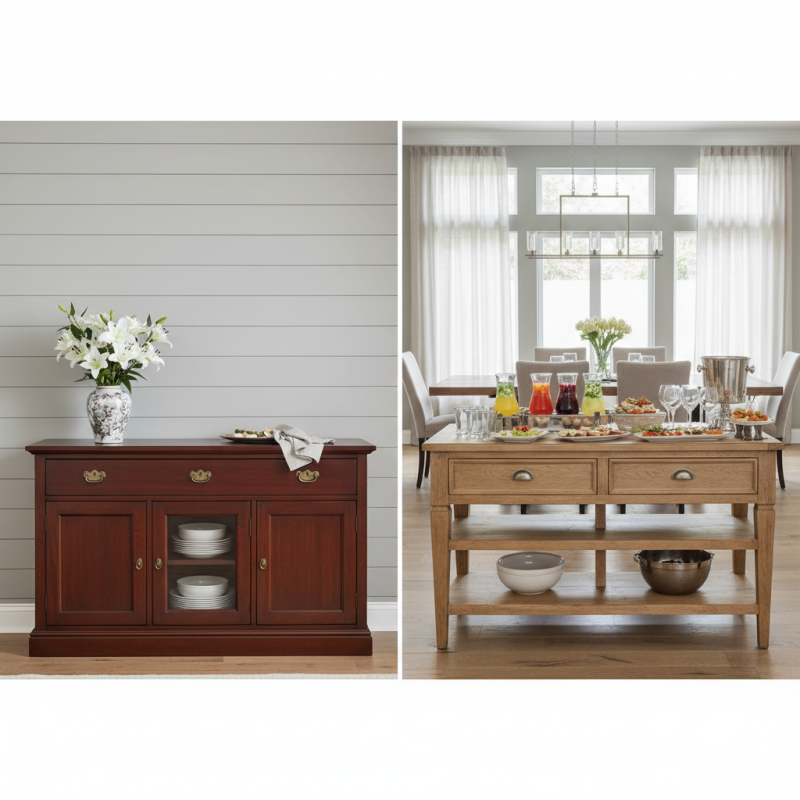
A sideboard typically boasts a lower profile, while a buffet tends to be taller and might include a service area. Sideboards often feature storage options for dishes and linens, promoting organization. In contrast, buffets can function as serving tables during gatherings, showcasing food and drinks. The materials can vary greatly, from wood to metal, reflecting personal style.

Consider the space you have and how you intend to use these pieces. Are you hosting formal dinners or casual family meals? The choice can shape your dining experience. Reflect on these factors, and you will make a more informed decision regarding these essential furniture items.
Top 10 Differences Between a Sideboard and a Buffet?

Definition and Purpose of a Sideboard in Interior Design

A sideboard, often found in dining areas, serves as a multifunctional piece of furniture. It typically features cabinets and drawers for storage. This design allows homeowners to store china, utensils, and other dining essentials conveniently. According to a report by the American Furniture Association, the popularity of sideboards has surged, with a 25% increase in sales over the past two years. This trend indicates their growing role in modern interior design.

The purpose of a sideboard extends beyond storage. Designers emphasize its ability to act as a display space. Homeowners can showcase decorative items, enhancing the overall aesthetics of their dining area or living space. A well-styled sideboard can tie a room together. Industry experts recommend using trays, plants, or art pieces to create visual interest.

Tips for selecting a sideboard include measuring your space. Ensure it complements your existing furnishings. Consider different styles, such as contemporary or rustic. Reflect on how you plan to use it. Storage needs can vary, so prioritize versatility in design. A sideboard should feel functional yet stylish. Assessing your lifestyle and the room's purpose will lead to a more satisfying choice.

Top 10 Differences Between a Sideboard and a Buffet

Feature Sideboard Buffet
Purpose Used for serving food and storing dining essentials. Primarily for displaying food items during a meal.
Design Usually taller and has more storage space. Often lower profile with a focus on surface area.
Storage More cabinets and drawers for utensils and linens. Less storage; mainly open space for food display.
Decorative Usage Can be styled with decorative items and art. Focuses on food presentation rather than decoration.
Common Materials Wood, metal, and glass. Wood, often with marble or stone tops.
Height Typically 34-36 inches high. Usually around 30-32 inches high.
Historical Use Originated from serving food in the home. Originated from buffet-style serving in public settings.
Versatility Can be used in various rooms, including living and dining areas. Mostly found in dining rooms or kitchens.
Contemporary Usage Commonly found in modern interior designs. Often seen in more traditional or casual settings.
Assembly Usually comes assembled or requires minimal assembly. May require more complex assembly due to size and features.

Definition and Purpose of a Buffet in Interior Design

A buffet, in interior design, serves as more than just a storage solution. It's a blend of functionality and style. Traditionally, buffets are low sideboards used in dining areas to store dishes and utensils. They also provide ample surface space for serving food during gatherings. According to the American Home Furnishings Alliance, the demand for multi-functional furniture has increased by 25% over the last few years. This trend highlights the growing emphasis on efficient space use.

When considering a buffet for your dining area, think about the materials. Wood adds warmth, while metal gives a modern touch. Measure your space carefully. A buffet should complement the room without overpowering it. Use colors that harmonize with your existing décor. A well-placed buffet can act as a focal point, enhancing the overall aesthetic.

Here’s a tip: Choose a buffet with adjustable shelving. It offers flexibility for different storage needs. Additionally, examine the design. A buffet with ornate details, such as carvings or unique handles, can elevate the style of your home. Such elements can invite guests to explore and engage, turning mere storage into a conversation starter.

Key Functional Differences between a Sideboard and a Buffet

When considering the functional differences between a sideboard and a buffet, it is essential to understand their unique purposes. A sideboard is often a multipurpose piece of furniture. It serves as a storage area for dishes and linens, but it also works well as a display surface for decorative items. It may have a more casual appearance, allowing for versatile use in various rooms.

On the other hand, a buffet typically focuses on dining functions. Buffets are often larger and designed to showcase food during meals. They often feature extended surfaces for serving and may have a more formal design. In some cases, buffets can be placed in dining rooms to enhance meal presentations.

Tips: When choosing between a sideboard and a buffet, consider the space available in your home. A smaller area might benefit from a sideboard, while a larger dining room can accommodate a buffet. Also, think about how often you host gatherings. A buffet may be more practical for frequent entertaining, while a sideboard is perfect for daily use.

Pay attention to the style and finish of the furniture. A well-chosen sideboard can blend with diverse decors, while a buffet should resonate with the dining room’s theme. Remember, both pieces can elevate your home's charm when used thoughtfully. It's important to reflect on your lifestyle needs before making a purchase.

Design Aesthetics: Variations in Style and Material Choices

When exploring the design aesthetics of sideboards and buffets, materials and styles play crucial roles. Sideboards often feature clean lines and contemporary finishes. They may include sleek metals or glossy woods. Buffets, on the other hand, are typically more ornate. They often showcase rich woods with intricate carvings. Each piece reflects the homeowner’s unique taste.

Consider the room's overall style when selecting one. If you have a modern space, a minimalist sideboard could enhance the vibe. For a vintage or eclectic look, an ornate buffet might be better. Mixing materials can provide depth. A wood buffet with metal accents can create an interesting contrast.

Tips: Pay attention to the balance of colors and textures. Having too many competing elements can lead to a cluttered appearance. Choose one focal piece and build around it. Also, ensure your chosen furniture complements other decor in the room. This creates a harmonious look, making the space feel cohesive and inviting.

Storage Capacity and Organization Features Compared

When examining the storage capacity of sideboards and buffets, the differences become apparent. Sideboards typically offer a more compact design. They usually feature cabinet doors and drawers that help organize items efficiently. According to a recent report by the Home Organization Association, a sideboard generally provides about 25% more usable space for smaller items compared to a buffet.

On the other hand, buffets tend to lean towards larger storage solutions. They often encompass wider surfaces and deeper compartments, ideal for bigger serving dishes. A survey by the Furniture Industry Research Group indicates that buffets can accommodate up to 50% more volume than standard sideboards. This makes them suitable for dining rooms where large gatherings take place.

However, it is crucial to consider both styles' accessibility. While buffets may hold more items, retrieving smaller objects can be cumbersome. Sideboards, though limited in space, allow for easier access. Analyzing user experiences, many find that organizing with a sideboard leads to less clutter. Still, some customers report a need for more expansive storage options than a sideboard can provide. This reflects the unique challenges in choosing the right piece for specific needs.

Top 10 Differences Between a Sideboard and a Buffet

This chart compares the storage capacity and organization features of sideboards and buffets based on their typical dimensions and utility.

FAQS

: What is a sideboard?

: A sideboard is a multifunctional piece of furniture with cabinets and drawers for storage.

Where are sideboards commonly used?

Sideboards are often found in dining areas for storing china and utensils.

How can a sideboard enhance my space?

Sideboards can act as display spaces for decorative items, improving room aesthetics.

What should I consider when selecting a sideboard?

Measure your space and ensure it complements existing furnishings for better harmony.

What are the style options for a buffet?

Buffets can be low sideboards, featuring warm woods or modern metals to fit various styles.

Why is adjustable shelving important in a buffet?

Adjustable shelving provides flexibility for different storage needs, making it more functional.

How can I make my sideboard visually appealing?

Use trays, plants, or art pieces to create interest and enhance the overall aesthetic.

Should I mix materials in my furniture design?

Yes, mixing materials can add depth, but balance is key to avoid a cluttered look.

What colors should I choose for a buffet?

Select colors that harmonize with your existing décor to create a cohesive feel.

Can a buffet serve a practical purpose during gatherings?

Yes, buffets provide ample surface space for serving food during dining occasions.

Conclusion

In exploring "What is the difference between a sideboard and a buffet?", it is essential to understand their definitions and purposes within interior design. A sideboard is typically a versatile piece of furniture used for storage and display, often found in dining and living rooms, while a buffet is specifically designed for serving food and can include features like serving counters.

Key functional differences arise in their design and organization; sideboards often focus on general storage with drawers and cabinets, whereas buffets are more oriented towards food service, with a surface perfect for displaying dishes. Aesthetically, both can vary widely in style and materials, allowing for personal expression in home decor. Ultimately, understanding these differences helps in making informed choices when furnishing a space.

Aria

Aria

Aria is a dedicated marketing professional with a deep passion for innovative strategies and a keen understanding of our company's product offerings. With a wealth of experience in the industry, Aria excels at crafting engaging content that highlights the unique features and benefits of our......