A heavy bookcase can look steady while standing still, yet a child climbing its shelves or a drawer pulled open can shift its center of gravity. The danger is not theoretical. The U.S. Consumer Product Safety Commission estimated 17,800 emergency-department-treated injuries in 2022 involving furniture, televisions, or appliances that tipped over. That figure covers several product types, not bookcases alone, but it shows why anchoring matters.
How to anchor heavy bookcases to the wall for safety? The answer depends on the bookcase, wall, and fasteners—not on a strap pulled tight and hope. Find the wall studs, use a manufacturer-approved restraint or suitable anti-tip hardware, and secure it with screws rated for the installation. For masonry or unusual wall construction, choose anchors designed for that material or consult a qualified installer. Keep heavier books on lower shelves, and check the restraint after moving or loading the unit. Small details count.
CPSC’s “Anchor It!” safety campaign advises consumers to anchor furniture to the wall. I can’t verify a named industry expert’s exact quotation from the material provided, so I won’t invent one. That restraint matters: hardware instructions and wall conditions vary, and a confident-sounding quote cannot replace them. A properly fitted anchor is easy to overlook. Until it is tested.
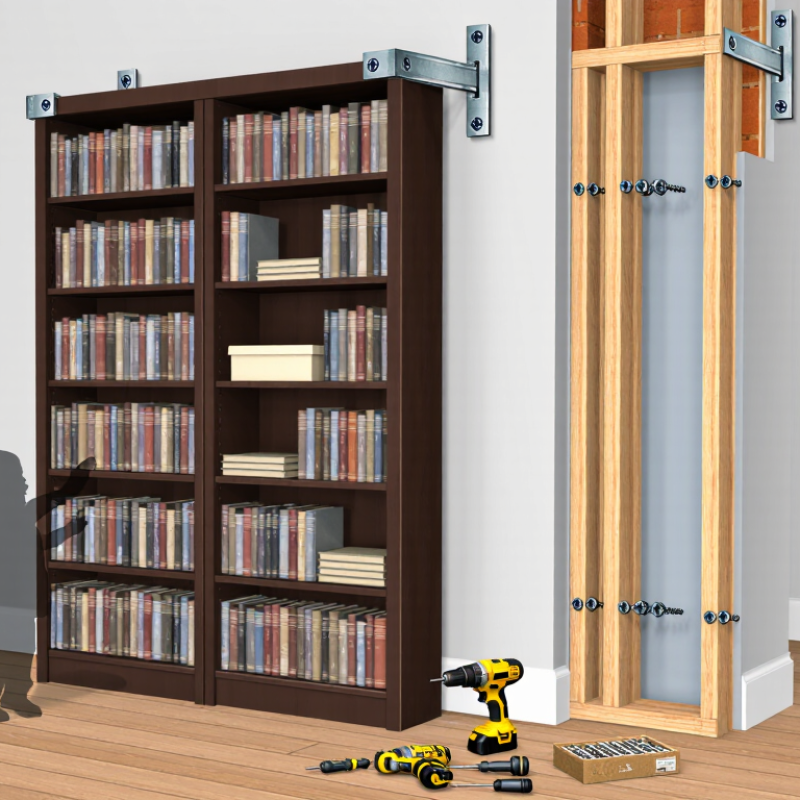
Assess the bookcase before choosing an anchor. Measure its height, width, depth, and total loaded weight. A tall, shallow case creates greater tipping force. Check for loose shelves, damaged joints, or a thin back panel. These weaknesses can defeat an otherwise strong wall connection. I once underestimated hardcover books. The finished load felt much heavier than expected.
Identify the wall type behind the bookcase. Tap the surface and inspect an outlet opening, but do not rely on sound alone. A stud finder can help locate timber or metal studs. Confirm the result with a small pilot hole. Solid wood or masonry usually offers stronger fixing points than hollow plasterboard. Plasterboard anchors must match the board thickness and expected load. Some fail when the load shifts repeatedly.
Use the CPSC report “Product Instability or Tip-Over Injuries and Deaths,” published in 2022. It estimated 22,500 emergency-department injuries involving furniture tip-overs among children under six from 2018 to 2020. That figure supports careful assessment, not guesswork. Record the bookcase weight, wall construction, and stud locations before drilling. The wall may look sound. It may not be. If the back panel is weak, install a suitable reinforcement strip or seek qualified advice before anchoring.
Choosing the right anchors and brackets begins with the wall, not the bookcase. A loaded bookcase can weigh far more than expected. Measure the case, estimate the books, and add extra capacity for uncertainty. Check whether the wall contains wooden studs, metal framing, or masonry. A stud offers dependable holding power when the screw length and diameter suit the material. Solid brick or concrete needs masonry screws or expansion anchors rated for that surface.
For drywall, avoid relying on a small plastic plug alone. Use a heavy-duty hollow-wall anchor only when no stud is available, and follow its stated load rating carefully. I prefer placing two brackets near the upper corners, with each bracket connected to a stud whenever possible. Wide, steel brackets usually spread force better than narrow ones. The bracket must also fit the bookcase frame without splitting its material.
Keep the bookcase level before tightening anything. Mark the holes with a pencil, drill slowly, and remove dust from masonry holes. Leave no noticeable gap between the case and wall. I once aligned a bracket accurately but used screws that were too short; the installation looked secure, yet it lacked meaningful depth.
That mistake changed my practice. I now test every connection by applying gradual hand pressure before loading shelves. Do not trust appearance alone. Recheck the anchors after the first week, especially if the floor vibrates or the bookcase is frequently used.
Before moving the bookcase into place, check the wall surface and choose a spot where the furniture can sit flat. A stud finder helps locate framing behind drywall. Move it slowly across the wall, then scan again from the opposite direction. Mark both edges of each stud and draw a small line at its center. A single reading can be misleading, especially near corners or trim. Tap the wall as a secondary check, but do not rely on sound alone.
Measure the height of the bookcase’s anti-tip bracket, then transfer that height to the wall. Mark the proposed screw points over the stud centers, keeping the bookcase level and close to the wall. Check the area for outlets, switches, or plumbing before drilling; wiring and pipes may run through wall cavities.
If the detector signals a hazard, stop and choose another point. No guesswork here.
Hold the bracket against the marks and confirm that its holes align with the stud centers. If they do not, adjust the bookcase position rather than forcing a screw at an angle. For masonry or metal-stud walls, use fasteners rated for that wall type and follow the furniture instructions.
I once found a stud mark shifted after measuring twice; it was a small mistake, but worth catching before drilling.
A heavy bookcase can shift when a child pulls a shelf or a door closes nearby. Secure it directly to the wall, not merely to the floor. Empty the shelves and move the case close to its final position. Use a level to check whether it leans. Small gaps can weaken the connection.
Find solid wall studs with a stud finder or careful tapping. Mark their centers behind the bookcase. Attach a metal anti-tip bracket or a strong wall strap to the upper frame. Drive suitable screws into the studs, keeping the hardware straight. For masonry or drywall without studs, use anchors rated for the bookcase’s weight. Check the anchor instructions carefully. Do not rely on a light-duty plastic plug for a loaded case. Leave enough space to avoid hidden pipes and electrical cables.
Tips: Use two people when positioning the bookcase. Pre-drill the frame to prevent splitting. Tighten screws firmly, but do not crush the wood. Test the case with gentle forward pressure. If it moves, stop and inspect every connection. I once trusted a “nearly level” cabinet, and the wobble became obvious after loading it. That mistake was avoidable. Keep heavy books on lower shelves, and inspect the hardware after a few weeks. Walls vary, and the first fixing choice is not always the right one.
| Step | Task | What to Do | Safety Check |
|---|---|---|---|
| 1 | Prepare the bookcase | Remove books and objects, then move the bookcase into its intended position. Follow the furniture maker’s assembly and anti-tip instructions. | Work with another adult when lifting or positioning a large or heavy unit. |
| 2 | Locate a suitable fixing point | For a framed wall, use a stud finder and confirm the stud location. Secure the wall-side hardware into a wood stud where possible. | Do not assume a spot is safe to drill. Check for possible electrical wiring and plumbing, and avoid drilling where utilities may be present. |
| 3 | Choose hardware for the wall | Use anti-tip brackets or restraints with screws and anchors suitable for the wall material. For masonry, use anchors specifically rated for the type of masonry and the intended load. | Drywall-only plastic plugs are not a suitable substitute for a stud or appropriately rated masonry fixing when securing heavy furniture. |
| 4 | Attach the restraint | Fasten one part of the anti-tip restraint to the bookcase’s solid frame and the other to the wall fixing point. Follow the hardware instructions for placement and installation. | Use the supplied or specified fasteners; do not attach the restraint only to thin backing material unless the furniture instructions explicitly allow it. |
| 5 | Check the connection | Remove slack from the restraint and confirm that all screws and brackets are firmly seated. The bookcase should remain upright and close to the wall. | The restraint is intended to reduce tip-over risk; it does not replace proper assembly or make overloading the bookcase safe. |
| 6 | Load and maintain safely | Place heavier books and items on lower shelves, distribute weight evenly, and keep frequently used items within easy reach. Recheck the restraint periodically and after moving the furniture. | Keep children from climbing or pulling on the bookcase, and do not exceed the furniture’s stated shelf or overall weight limits. |
A heavy bookcase can look stable while hiding a serious tipping risk. The U.S. Consumer Product Safety Commission’s 2022 Furniture Tip-Over report estimated about 22,000 emergency-treated injuries annually between 2018 and 2020. Installation deserves more attention than appearance.
Empty the bookcase before anchoring it. Check the floor, wall, back panel, and fasteners for damage. Use a level across the top. Find solid wall studs with a stud finder, then mark both attachment points. Drywall alone is not reliable for heavy furniture. For masonry, select anchors rated for that wall material. Follow the hardware manufacturer’s stated load rating. Do not improvise with short screws or weak plastic plugs.
Attach two anti-tip restraints near the upper corners. Keep the bookcase firmly against the wall, but avoid crushing a thin back panel. Load the lowest shelves first. Place large, dense books below lighter items. Keep weight centered and leave no shelf visibly bowed. Never store heavy objects above shoulder height. Children should not climb or pull on shelves. I once focused too much on the anchor and overlooked an uneven floor; the cabinet still shifted slightly. Recheck every connection after several days, especially after moving books or cleaning. ANSI/BIFMA X5.9 guidance also treats storage-unit stability as a complete system, not a single fastener.
Measure its size and loaded weight, and inspect its shelves, joints, and back panel. A tall, shallow case can tip more easily. Mine felt heavier after I filled it with hardcovers.
Use a stud finder and confirm its reading carefully. Tapping can help, but sound alone is unreliable. Check the wall material before choosing fasteners.
Find both edges of each stud and mark its center. Measure the bracket height, then align the screw holes with those marks. Check for wiring or pipes before drilling.
Adjust the bookcase position instead of driving a screw at an angle. For masonry or metal framing, use fasteners designed for that wall type.
Drywall alone may not support a heavy, shifting load. Match any anchor to the board thickness and expected weight. Some can fail over time.
Make sure it sits level and firmly against the wall. Check the floor, fasteners, and back panel. Recheck the connections after several days.
Load the lowest shelves first, placing dense books below lighter items. Keep weight centered and avoid visibly bowed shelves. Leave heavy objects low.
Attach two anti-tip restraints near the upper corners. Keep children from climbing or pulling on shelves. A secure anchor matters, but so does an even floor.
How to anchor heavy bookcases to the wall for safety? Start by examining the bookcase’s size, weight, construction, and center of gravity, then identify whether the wall is made of wood studs, masonry, or drywall. Select strong brackets and anchors that match both the furniture and the wall material. Avoid relying on unsuitable fasteners, especially when the bookcase will hold heavy items.
Next, use a stud finder or careful measurements to locate secure attachment points, and mark their positions at the top or upper back of the bookcase. Attach the brackets firmly to the bookcase and the wall, ensuring every screw is fully tightened and properly supported. After installation, gently test the bookcase for movement, correct any looseness, and confirm that it sits level. Load the shelves gradually, placing heavier objects on lower levels, distributing weight evenly, and keeping frequently handled items within easy reach. Regularly inspect the brackets and fasteners for signs of loosening or damage.

ADC Furniture