Outdoor patio furniture can be a significant investment. However, maintaining it in rainy weather poses challenges. According to a report by the American Society of Landscape Architects, up to 80% of outdoor furniture deterioration is due to exposure to moisture. This reality emphasizes the need for effective protection strategies.
Expert designer Sarah Johnson states, “To protect outdoor patio furniture from rain, proactive measures are essential.” She highlights the importance of using high-quality waterproof covers and choosing materials that resist water damage. These strategies not only extend the life of the furniture but also maintain its aesthetic appeal.
However, many homeowners still overlook the effects of humidity and rain. This negligence can lead to mold, rust, and fading. Regular maintenance checks and proper storage solutions can mitigate these risks. Ultimately, understanding how to protect outdoor patio furniture from rain is crucial for preserving both function and beauty.
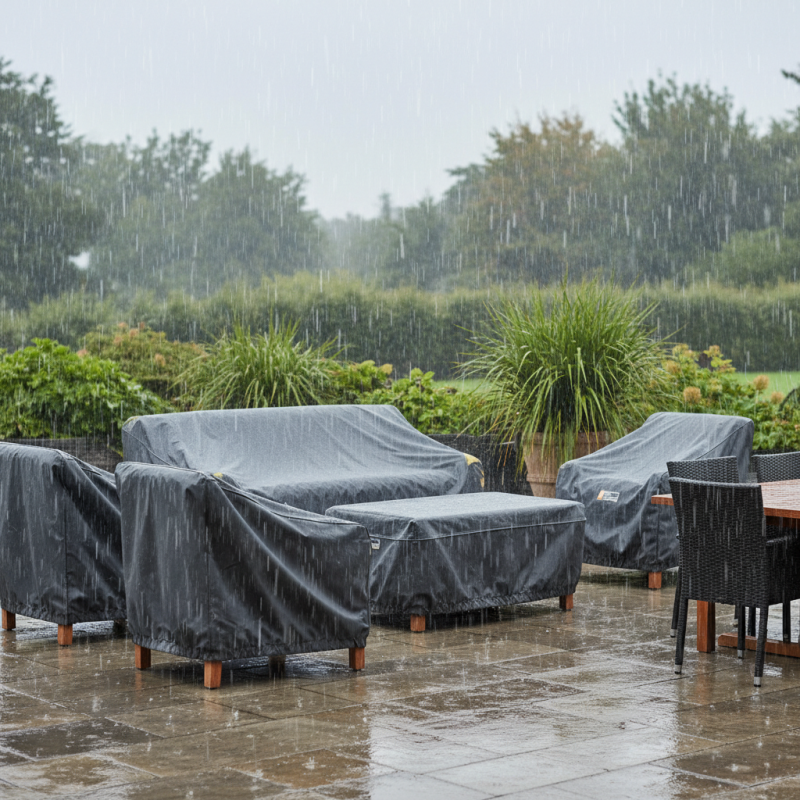
When selecting outdoor patio furniture, the material plays a critical role. Choosing weather-resistant materials can significantly reduce maintenance and prolong the lifespan of your investment. Metals like aluminum and stainless steel are excellent options. They resist rust and corrosion even in humid conditions. Additionally, high-density polyethylene (HDPE) is a durable alternative that does not warp or fade under sunlight.
Wood offers a classic charm; however, it demands more care. Teak is renowned for its natural oils that repel water and insects. Despite its advantages, wood requires proper sealing and regular maintenance. On the other hand, synthetic wicker mimics the look of natural materials while providing great weather resistance. It is lightweight and easy to clean, but it may not be as robust in heavy rain.
No material is perfect, and each has its trade-offs. While metal furniture may feel cold in cooler weather, wood can rot if not properly treated. Reflection on these factors can lead to better decisions. Proper care, including covers and movement to sheltered areas, can further enhance durability. Consider your unique environment, and choose wisely to enjoy your patio throughout the year.
: Use weather-resistant covers designed to keep moisture out. Ensure they fit snugly around each piece of furniture.
Consider a storage shed or outdoor closet. Ensure it is ventilated to prevent mold and store cushions indoors.
Elevating prevents water from pooling beneath the furniture, reducing the risk of water damage.
Create a slight slope in the patio surface to direct water away. Installing drainage tiles is also an effective option.
Check it regularly and clear any clogs. Standing water can damage your furniture significantly.
Regular cleaning with mild soap and water is essential. Avoid harsh chemicals that can damage the surfaces.
Neglect can lead to a 50% reduction in lifespan. Minor repairs and maintenance can help avoid significant issues.
Covers provide some protection but won’t prevent drainage issues. Water can still collect on top of them.
Always bring cushions inside when heavy rain is forecasted. This helps prevent mold and mildew from forming.
Be proactive in addressing minor repairs quickly. This can help prevent larger and more costly repairs in the future.
When considering how to protect outdoor patio furniture from rain, selecting the right materials is essential. Opt for weather-resistant materials like aluminum, teak, or synthetic wicker, which can withstand damp conditions without deteriorating. Additionally, investing in protective covers is a practical approach to shield your furniture during inclement weather. These covers can prevent moisture accumulation and preserve the integrity of your furniture.
Proper storage solutions also play a vital role in maintaining your furniture during rainy seasons. Storing items indoors or in a dry shed can significantly reduce exposure to water. Implementing effective drainage techniques around your patio will help keep water away from furniture and minimize risk. Lastly, regular maintenance, such as cleaning and inspecting for damage, will extend the life of your patio furniture. Following these guidelines helps ensure your outdoor space remains inviting, even in less favorable weather.

 ADC Furniture