Teak outdoor furniture is valued for its rich grain, natural oils, and impressive weather resistance. Yet even durable teak can gradually turn silver-gray under sunlight, rain, dust, and changing humidity. This color change is usually natural, not a sign of structural failure. Still, many homeowners prefer to preserve the wood’s warm honey tone.
The practical question is simple: How to maintain teak outdoor furniture to prevent graying? The answer involves regular cleaning, sensible placement, and careful protection. Remove leaves and standing water before they settle into the grain. Wash the surface with mild soap, clean water, and a soft-bristle brush. Avoid pressure washing, harsh chemicals, and aggressive sanding. They can roughen the surface and remove healthy wood fibers.
Keep it consistent.
A quality teak protector may help slow oxidation, but it cannot stop outdoor aging forever. Follow the product instructions and test it on a hidden area first. I have found that shaded furniture often keeps its color longer, although shade does not eliminate maintenance. Covers can help during heavy rain or long periods of nonuse. However, trapping moisture beneath a cover may encourage mildew.
Inspect the furniture every few months. Look closely at joints, tabletops, and areas beneath cushions. Small stains are easier to remove when they are fresh. If the wood has already grayed, gentle cleaning and light sanding may restore some of its original appearance. The result may not be perfectly uniform, and that is worth accepting. Teak is a living material in appearance, even after it becomes furniture. Consistent care preserves its character while reducing unwanted discoloration.
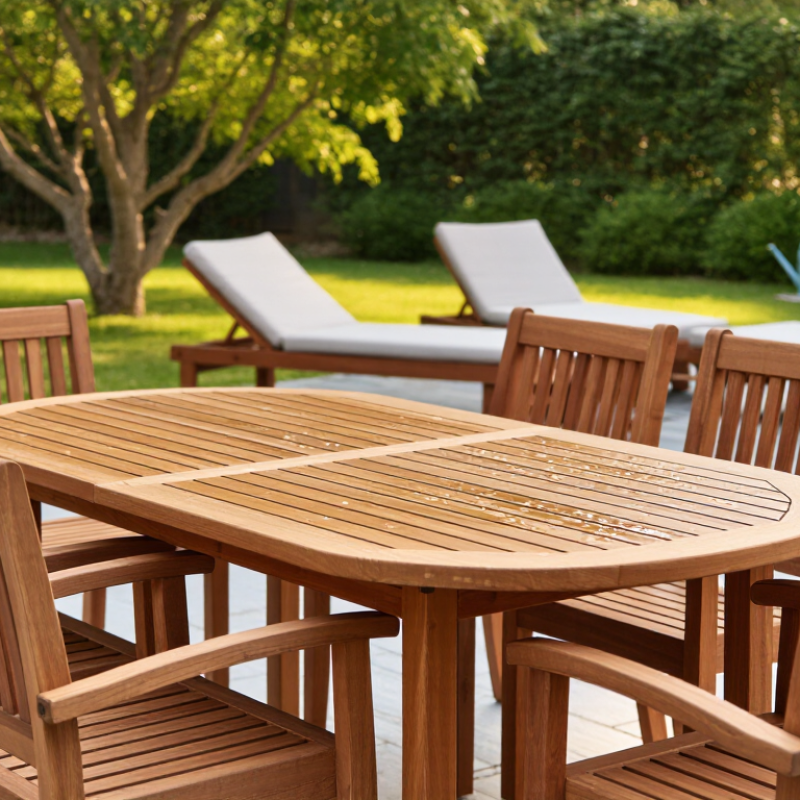
Understanding Why Teak Furniture Turns Gray Outdoors
Teak turns gray outdoors mainly because sunlight, rain, and air slowly weather its surface.
Ultraviolet rays break down the wood’s natural golden pigments. Rain then washes away those weakened surface fibers. This creates the familiar silver-gray patina. It is usually a surface change, not immediate structural damage. That change is normal.
Moisture also affects the color. Shaded areas may remain brown, while exposed edges fade faster. Dirt, pollen, and mildew can make the gray look darker or uneven.
Metal stains may add blue or black marks near screws and fittings. After a wet season, inspect joints, end grain, and areas touching the ground. Soft spots or deep cracks need more attention than ordinary fading.
If you want to preserve teak’s original color, clean it regularly with mild soap, water, and a soft brush. Scrub along the grain, then rinse thoroughly. Avoid pressure washers; they can roughen the surface and open the grain.
For stubborn stains, light sanding may help, but aggressive sanding removes valuable wood. I have found that applying exterior teak protection after complete drying gives more consistent color.
Still, no coating stops weathering forever. Reapply it according to the product instructions, especially after harsh sun or repeated rain.
Oil can also darken the wood, yet it may attract dirt when applied too heavily. That is an easy mistake.
Choosing Safe Cleaning Methods for Teak Surfaces
How to Maintain Teak Outdoor Furniture Without Graying?
Choosing Safe Cleaning Methods for Teak Surfaces
Teak naturally turns silver-gray when sunlight and moisture oxidize its surface. Safe cleaning will not stop this change completely. It can, however, remove dirt without stripping the wood’s protective oils. Begin by brushing away leaves with a soft, dry cloth. Then wet the furniture with clean water.
Use a mild, pH-neutral soap mixed with lukewarm water. Apply it with a soft nylon brush, following the grain. Keep the pressure light, especially around joints and end grain. Let the solution sit briefly, not long enough to dry. Rinse every area thoroughly, including the underside of slats. Remaining soap can leave pale streaks.
Avoid wire brushes, strong solvents, and undiluted chlorine cleaners. They may scratch teak or create uneven color. A pressure washer is risky too. Even a low setting can raise the grain. Test any cleaning solution on a hidden corner first. Wait until the patch dries before judging the result.
Do not rush the drying stage. Place the furniture in shade with good airflow, rather than under harsh midday sun. I once cleaned too aggressively and noticed rough fibers after drying. That mistake changed my routine. Now I use less pressure and accept some remaining gray. Perfection is not always safer. Teak oil may deepen the color, but it can also attract dust and require frequent renewal. Use it only after checking the wood’s condition and the product instructions.
Removing Dirt, Mildew, and Existing Gray Weathering
Keeping teak outdoor furniture from graying begins with removing the causes of discoloration. Brush away loose dirt with a soft-bristle brush, then rinse the surface with clean water. Mix mild soap with warm water, and scrub along the wood grain. Avoid harsh detergents and aggressive pressure washing. They can open the grain and leave uneven marks. For mildew, use an oxygen-based wood cleaner according to its instructions. Wear gloves and eye protection. Let the cleaner work briefly, then rinse thoroughly. Never allow dirty foam to dry on the teak.
Existing gray weathering needs gentler correction than many people expect. I usually start with a small hidden test area. A teak cleaner may restore some color, but deeply weathered fibers often require light sanding. Use 120- to 180-grit sandpaper and follow the grain, not across it. Remove the sanding dust with a damp cloth, then let the furniture dry completely. I once rushed this step and sealed damp wood; the finish looked cloudy and uneven. That mistake was avoidable. After cleaning, apply a breathable exterior wood protector if maintaining the natural honey color is important. Recheck the furniture every few months, especially after heavy rain.
Tips: Keep cushions dry and remove leaves quickly. Clean bird droppings before they harden. Test every cleaner first. Do not mix cleaning products. Gentle maintenance works better than occasional heavy restoration.
Applying Teak Protection Without Changing Its Natural Color
Teak turns silver-gray when ultraviolet light breaks down surface lignin. This is weathering, not usually structural failure. The USDA Forest Products Laboratory’s Wood Handbook, FPL-GTR-282, identifies sunlight and moisture cycling as major causes of exterior wood surface change. Teak’s natural oils improve decay resistance, but they do not permanently preserve its golden color.
Apply protection only to clean, completely dry furniture. Use a clear exterior wood protector with documented UV resistance and low color change. Avoid heavy oil coatings unless a darker, richer tone is acceptable. Many oils deepen teak’s amber color and can create uneven patches. A thin, even coat works better than soaking the surface. Wipe away excess after several minutes, especially around joints and end grain.
Test first.
Choose an underside area. Wait through the full curing period before judging the color. A coating that looks invisible in shade may appear warmer in direct sunlight. ASTM G154 laboratory testing is commonly used to evaluate UV-related weathering, but real patios add rain, dust, and standing water. Reapply according to the product’s tested service interval, often after visible fading or water no longer beads. In practice, I have found that quarterly inspection is more reliable than following a fixed calendar. My earlier mistake was applying protection too soon after washing; trapped moisture left a dull, uneven finish. Let the teak dry thoroughly, then inspect the grain under natural daylight.
How to Maintain Teak Outdoor Furniture Without Graying?
A practical annual maintenance schedule for preserving teak’s warm natural color: clean regularly, inspect the surface, and reapply a clear teak protector according to the product label and local exposure conditions.
The chart shows typical maintenance intervals in months. Frequent cleaning removes dirt and organic buildup, while a clear, non-tinted teak protector helps reduce weathering without adding a colored finish. Furniture exposed to intense sun, rain, or coastal air may require more frequent care.
Creating a Seasonal Maintenance Routine for Long-Term Care
How to Maintain Teak Outdoor Furniture Without Graying?
Creating a Seasonal Maintenance Routine for Long-Term Care
A seasonal routine protects teak better than occasional heavy cleaning. In early spring, inspect joints, feet, and tabletops for trapped moisture. Wash the surface with mild soap, warm water, and a soft brush. Scrub along the grain. Avoid aggressive pressure washing, which can raise the grain and remove softer wood fibers. The USDA Forest Products Laboratory’s Wood Handbook identifies approximately 30% moisture content as teak’s fiber saturation point. This matters because repeated wetting and drying can increase surface movement and small cracks. Let the furniture dry completely before applying a suitable UV-protective finish.
Summer sunlight needs closer attention. NOAA classifies a UV Index of 6 or higher as high, requiring protection for exposed skin. Teak also receives intense ultraviolet exposure during these periods. Place furniture under partial shade when possible, but keep air moving around it. Wipe spills quickly. Do not seal damp wood.
In autumn, clean pollen and leaves from corners and drainage gaps. Check the finish every six to eight weeks. That interval is practical, though harsh coastal weather may demand more frequent care. In winter, raise the legs from standing water and use a breathable cover, not an airtight wrap. Inspect again in spring. I once waited too long and found black spotting beneath a cushion. The mistake was preventable. Wood care is not perfectly predictable; nearby trees, humidity, and poor airflow can change the schedule. Small inspections usually cost less than major restoration.
FAQS
Ultraviolet light breaks down surface lignin. Moisture cycles also accelerate weathering. Gray color usually does not mean structural failure.
Brush gently with a soft-bristle brush. Rinse with clean water. Scrub along the grain using mild soap and warm water.
It is better to avoid it. Strong pressure can open the grain and create uneven marks. Gentle cleaning is safer.
Use an oxygen-based wood cleaner as directed. Wear gloves and eye protection. Rinse thoroughly before dirty foam dries.
No. Test a small hidden area first. A suitable cleaner may restore some color, but deeply weathered fibers may need light sanding.
Use 120- to 180-grit sandpaper. Follow the wood grain. Remove dust with a damp cloth, then wait until the furniture dries completely.
Choose a clear exterior wood protector with documented UV resistance and low color change. Apply one thin, even coat.
Oils can deepen teak’s amber tone. They may also leave darker patches, especially around joints and end grain.
Apply it only after cleaning and complete drying. Trapped moisture can cause a cloudy, uneven finish. I learned this the hard way.
Inspect the furniture every few months, especially after heavy rain. Reapply when fading appears or water stops forming small beads.
Keep cushions dry. Remove leaves quickly. Clean bird droppings before they harden. Small habits matter.
Yes. Test an underside area first. Wait through the full curing period before judging the final color. Shade can mislead you.
Conclusion
Teak outdoor furniture naturally turns gray when sunlight, rain, humidity, and air exposure gradually break down the wood’s surface oils. This weathered color does not necessarily mean the furniture is damaged, but proper care can help preserve its warm golden appearance. How to maintain teak outdoor furniture to prevent graying? Begin by removing loose dirt with a soft brush, then clean the surface using mild soap, water, and a non-abrasive cloth or sponge. Avoid harsh chemicals, pressure washing, and rough scrubbing, which can damage the wood fibers.
For mildew, stains, or existing gray weathering, use a gentle wood-safe cleaner and work carefully along the grain. After rinsing, allow the furniture to dry completely before applying a suitable teak protector designed to maintain its natural color. Do not use protection products on damp wood. A seasonal routine of cleaning, inspecting joints, covering furniture during severe weather, and refreshing protection when needed will help maintain its appearance and extend its outdoor lifespan.

 ADC Furniture