How to Organize Your Small Wardrobe for Maximum Space?

Time:2026-05-01 Author:Sophia
0%

A small wardrobe can often feel like a limitation. However, with the right approach, it can become a source of creativity and efficiency. The key question is how to organize a small wardrobe effectively? This involves more than just rearranging items. It requires a thoughtful strategy to maximize your available space.

Consider your clothing habits and the types of garments you own. Assess what you wear frequently and what you can discard. A small wardrobe is an opportunity to showcase your favorite pieces. Invest in storage solutions that not only save space but also add style. For instance, use slim hangers to increase hanging space and incorporate drawer organizers for smaller items.

However, it’s important to reflect on your approach. Are you holding onto pieces that no longer serve you? Letting go can be hard. Yet, embracing a less cluttered space can lead to more streamlined choices. The goal is not just to fit everything but to create a wardrobe that brings joy and ease to your daily life.
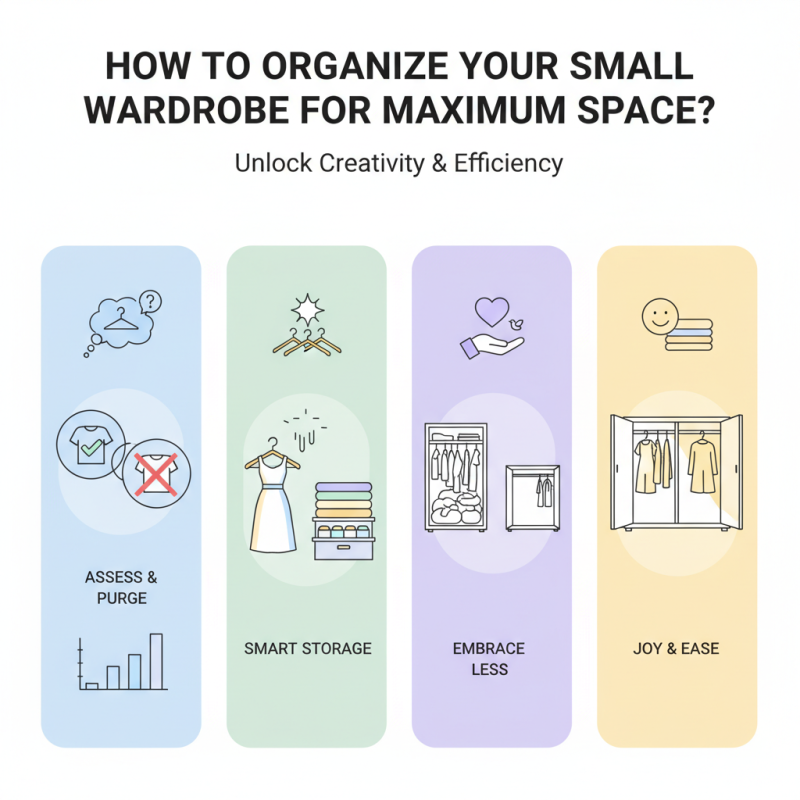
How to Organize Your Small Wardrobe for Maximum Space?

Assessing Your Current Wardrobe Space and Needs

When assessing your current wardrobe space and needs, start by evaluating what you own. A recent study shows that 80% of people wear only 20% of their clothing. This highlights the importance of curating your wardrobe. Take everything out, categorize items, and identify pieces that you haven't worn in a year. This process can be eye-opening. You may realize that some clothes no longer fit your style or lifestyle.

Tips: Use transparent storage bins to store seasonal clothes. This keeps your wardrobe organized and accessible. Consider the "one in, one out" rule. For every new item you buy, let go of an old one. It helps to prevent clutter.

Assess your storage solutions as well. Many small wardrobes benefit from utilizing vertical space. Hanging shelves or double-hanging rods can maximize storage. According to a recent survey, 70% of respondents found that efficient closet design significantly improved their daily routine. Reflect on your wardrobe habits. Are you holding onto items that don’t spark joy? Letting go can create a more functional space tailored to your needs.

Sorting Clothes: What to Keep, Donate, or Discard

Sorting through a small wardrobe can feel overwhelming. Rethink your clothing collection. Start by dividing items into three categories: keep, donate, or discard. This process requires honesty and reflection. Consider whether an item truly fits your style and lifestyle. If it doesn't spark joy or utility, it may need to go.

When deciding what to keep, think about versatility. Choose pieces that can mix and match easily. A simple, neutral top can pair with multiple bottoms. Limit formal wear to only what you wear regularly. Look for items that fit well. Ill-fitting clothes often end up unworn, just taking up space. Reflect on your wardrobe regularly to avoid clutter.

Tips for donation include checking for wear. If an item has significant stains or damage, it may be best to discard it. Organizations typically prefer gently used clothing. As for discarding, don’t feel guilty. It’s okay to let go. Acknowledge that every piece served its purpose at some point. Make room for new favorites.

How to Organize Your Small Wardrobe for Maximum Space?

Category Examples Action
Keep Favorite jeans, white shirts, versatile dresses Regular use, fits well, in good condition
Donate Clothes you haven't worn in a year, duplicates Still in good shape, could benefit someone else
Discard Torn jeans, faded shirts, outdated styles No longer wearable or useful
Seasonal Winter coats, summer dresses Store off-season items to free space
Special Occasion Wedding outfits, formal suits Keep for future use, if they fit and are in style

Maximizing Vertical and Horizontal Storage Solutions

When organizing a small wardrobe, maximizing vertical and horizontal space is crucial. Research from the National Association of Professional Organizers shows that nearly 80% of people have a cluttered closet. This highlights the importance of effective storage solutions. Installing shelves above hanging clothes can free up valuable floor space. Consider adding pull-out baskets on the lower shelves. They ensure easy access and hide away lesser-used items, like off-season clothing.

Vertical space is often underutilized. Utilizing hooks on the inside of doors is effective for accessories. According to a study by the American Cleaning Institute, clutter can increase stress levels, causing individuals to feel overwhelmed. Vertical storage can create a more organized feel. Utilizing multi-tier hangers can also maximize hanging space. This method allows you to store multiple items in just one hanging section. Tidiness can boost mood, but it can be a challenge to maintain.

Reflecting on personal habits is essential. Are you holding onto items that no longer serve you? The 80/20 rule often applies in wardrobes: 20% of your clothes account for 80% of your wear. Regularly assessing your wardrobe can lead to better organization. Reducing items you rarely wear can free up both space and mental clarity. Organizing is a continuous process; small changes can lead to significant impacts.

Incorporating Organizers and Accessories for Small Spaces

When it comes to organizing a small wardrobe, incorporating the right organizers and accessories is crucial. Use drawer dividers to separate accessories like scarves and belts. This keeps everything visible and easily accessible. Hanging organizers can save space while providing an excellent place for shoes or bags. They utilize vertical space, which is often underused.

Consider investing in slim hangers to maximize hanging space. These save room and prevent clothes from slipping. If you have extra wall space, install hooks or pegboards for items like hats or jewelry. It creates an eye-catching display while keeping items off the floor.

While you may rely heavily on these solutions, it’s easy to overspend on organizers. Reflect on what you truly need versus what looks appealing. Striking a balance between functionality and aesthetics is essential. Remember, sometimes less is more, and simplicity leads to better organization.

Creating a Seasonal Rotation System for Easy Access

Creating a seasonal rotation system for your wardrobe can greatly enhance accessibility and efficiency. According to a study by the American Apparel and Footwear Association, 80% of people wear only 20% of their clothing regularly. This statistic highlights the importance of organizing your wardrobe to make space for the pieces that truly count.


To start, sort your clothes by season. Designate specific sections for winter, spring, summer, and fall items. This method ensures you can easily access the clothing appropriate for the current weather. Ideally, your most frequently worn items should be kept at eye level. Those items you rarely wear can be stored on higher shelves or in bins.


Here are some useful tips:

  • Use thin hangers to maximize space.
  • Implement drawer dividers for smaller items.
  • Regularly assess your clothing to eliminate pieces that no longer serve you.
Experts suggest revisiting your wardrobe every six months. This practice encourages reflection on your style and helps maintain an organized system. By creating a seasonal rotation, you not only gain space but also streamline your daily choices.

FAQS

: How should I start sorting my clothes?

: Divide your clothes into three categories: keep, donate, or discard. Be honest with yourself.

What criteria should I use to decide what to keep?

Consider versatility and how well items fit your style. If something doesn’t spark joy, let it go.

What should I do with clothes that are damaged?

Donating damaged clothes isn't ideal. It’s better to discard significant stains or damages.

How can I organize a small wardrobe effectively?

Use drawer dividers and hanging organizers. They help keep everything visible and accessible.

What types of hangers should I use for better organization?

Invest in slim hangers. They save space and prevent clothes from slipping.

How can I maximize vertical space in my wardrobe?

Install hooks or pegboards for accessories like hats. This frees up floor space.

How often should I assess my wardrobe?

Experts recommend revisiting your clothes every six months. It's a good reflection process.

Is it necessary to buy many organizers?

Not really. Reflect on your needs. Sometimes less is more for a streamlined look.

What’s the benefit of a seasonal rotation system?

It helps you easily access appropriate clothing and can create more space.

What should I do if I feel guilty about discarding clothes?

Acknowledge that every piece served a purpose. It's okay to let go for new favorites.

Conclusion

Organizing a small wardrobe can be challenging, but understanding how to organize a small wardrobe effectively can make a significant difference in maximizing your space. Begin by assessing your current wardrobe space and needs, which helps identify what you truly require and what can be removed. Sorting clothes into categories of keep, donate, or discard will streamline your options and create a clearer layout.

Next, maximize your storage solutions by utilizing both vertical and horizontal space. This may involve installing additional shelves or using hanging organizers to create more room. Incorporating organizers and accessories specifically designed for small spaces can enhance efficiency and accessibility. Finally, establish a seasonal rotation system to ensure that your wardrobe remains manageable, making it easy to access clothing when needed. By following these steps, you can transform your small wardrobe into a well-organized and functional space.

Sophia

Sophia

Sophia is a dedicated marketing professional with an exceptional depth of knowledge about her company's products and services. With a keen understanding of market trends and customer needs, she crafts insightful blog posts that not only inform but also engage readers, enriching the company’s online......