What is the standard height for a bedside table? The practical answer is simple: its surface should sit level with, or slightly above, the top of your mattress. Most bedside tables measure between 24 and 28 inches high, but no universal regulation defines one correct dimension.
That gap matters. A table that is too low makes reading glasses and water harder to reach. A table that is too high can force awkward shoulder movement during the night. The American Academy of Sleep Medicine and Sleep Research Society recommend that adults obtain at least seven hours of sleep nightly, according to their joint consensus report published in Sleep. A well-positioned table supports a calmer bedtime routine, even though it cannot solve poor sleep alone.
Professional furniture standards offer useful boundaries, but not a magic number. BIFMA standards emphasize stability, durability, and safe furniture performance rather than prescribing bedside-table height. The U.S. Consumer Product Safety Commission also highlights stability risks for furniture with storage components, especially around children. Therefore, measure from the floor to your mattress top, not merely to the bed frame. A 25-inch mattress may need a taller table than a low platform bed.
A useful target is mattress height plus zero to two inches. Test it beside the bed. Your elbow should bend naturally when reaching for a lamp or phone. This rule is practical, not perfect. Personal mobility, mattress compression, and room layout still change the answer.
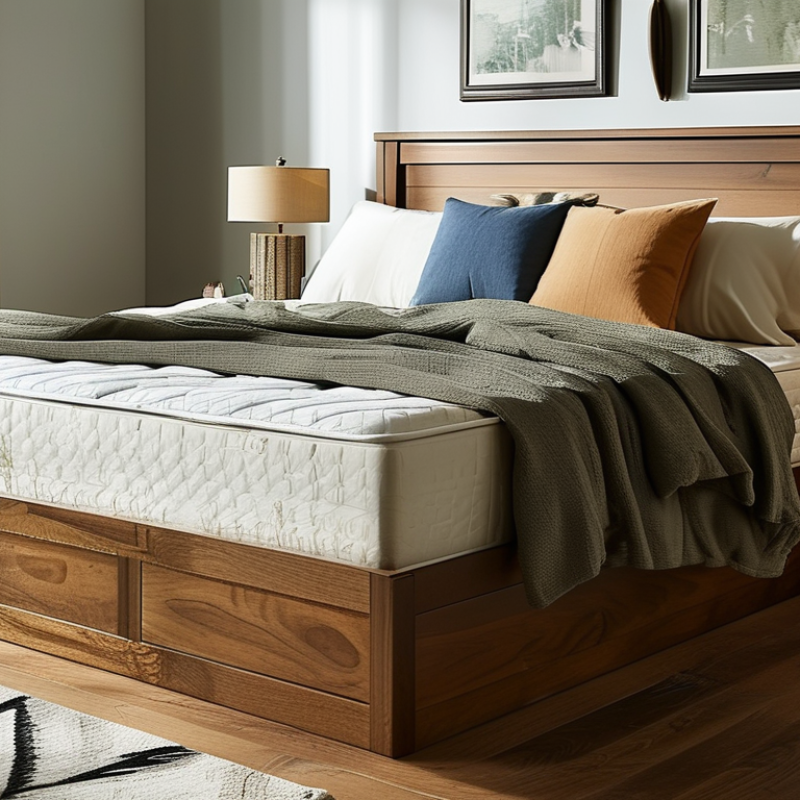
The standard bedside table height usually matches the top of your mattress. A practical range is 24 to 28 inches from the floor. Measure from the floor to the mattress surface, not the bed frame. This small detail matters. A thick mattress can change the result by several inches. In my experience, a table sitting slightly below the mattress feels comfortable and looks balanced. A table that is too low makes reading lamps and drinks harder to reach. One that is too high may feel awkward beside the pillow.
Your sleeping habits also affect the ideal measurement. If you often read in bed, place the tabletop close to elbow height. Check whether drawers open without touching the bed. Leave enough space for movement beside the frame. Measure twice. I once overlooked a thick mattress topper, and the finished table felt noticeably short. Exact measurements are useful, but comfort deserves the final decision.
A bedside table usually works best when its top sits level with the mattress. A difference of two inches is often comfortable. Measure from the floor to the mattress surface, not the bed frame. A thick topper can change the result more than expected.
For example, a 24-inch-high bed suits a table around 22 to 24 inches tall. A low platform bed may need a 16 to 20-inch table. Taller beds with deep mattresses often need 26 inches or more. The goal is simple: your hand should reach the lamp, book, or water glass without lifting your shoulder. Keep frequently used items within a relaxed arm’s length.
I check the height while sitting in bed, because measurements alone can mislead. A soft mattress compresses under the hips, while a firm mattress barely moves. That small difference matters at night. Place a temporary box beside the bed and test it for a day. Test it carefully. I once chose a table that looked balanced but felt awkward; its lower shelf forced me to bend too far. I still think “level with the mattress” is useful, but it is not a strict rule. Not always. Reading posture, mobility, lamp size, and walking clearance can justify a slightly higher or lower surface.
What Is the Standard Height for a Bedside Table?
A bedside table usually works best when its top sits level with the mattress. A difference of two inches is normally comfortable. This position keeps lamps, books, and glasses within easy reach. It also reduces awkward bending during the night. In most homes, bedside tables measure between 20 and 30 inches high. However, bed design changes the suitable range.
Common bedside table height ranges vary by bed type. A low platform bed often pairs with a 18-to-24-inch table. A standard twin or full bed usually suits 20 to 25 inches. Queen beds commonly work with 22 to 28 inches. A tall bed frame, thick mattress, or added topper may need a 26-to-30-inch table. Measure from the floor to the mattress surface, not just the frame. I once selected a table by frame height alone, and the finished setup felt noticeably too low. That mistake still seems easy to make.
Tips: Sit on the bed and reach toward the table before buying. Your elbow should remain relaxed, not lifted. Check drawer clearance if the bed has a deep side rail. Leave enough space for walking and opening drawers. A small mismatch can be acceptable, especially with a soft mattress that compresses overnight. Recheck the measurement after installation.
| Bed Type | Typical Mattress-Top Height | Recommended Bedside Table Height | Ideal Difference From Mattress | Common Table Width | Practical Considerations |
|---|---|---|---|---|---|
| Low Platform Bed | 16–20 in (41–51 cm) |
16–22 in (41–56 cm) |
Same height to 2 in lower | 18–24 in (46–61 cm) |
Choose a compact table so the furniture does not visually overpower the low bed frame. |
| Standard Platform Bed | 20–24 in (51–61 cm) |
20–26 in (51–66 cm) |
Same height to 2 in lower | 20–28 in (51–71 cm) |
This is one of the most flexible bed types because many standard bedside tables fit comfortably. |
| Traditional Bed With Box Spring | 24–28 in (61–71 cm) |
24–30 in (61–76 cm) |
Same height to 2 in lower | 22–30 in (56–76 cm) |
A taller table usually provides easier access without excessive reaching from a higher mattress. |
| Upholstered or High-Profile Bed | 25–30 in (64–76 cm) |
25–32 in (64–81 cm) |
Same height to 2 in lower | 24–32 in (61–81 cm) |
Measure the finished mattress height, including any thick topper, before selecting the table. |
| Adjustable Bed Base | 22–30 in (56–76 cm) |
22–30 in (56–76 cm) |
Same height or up to 2 in lower | 20–28 in (51–71 cm) |
Leave clearance for movement and confirm that drawers, lamps, and cords remain accessible when the bed is raised. |
| Storage Bed With Drawers | 22–28 in (56–71 cm) |
22–30 in (56–76 cm) |
Same height to 2 in lower | 20–28 in (51–71 cm) |
Keep enough space between the table and bed to open drawers or lift storage compartments. |
| Bunk or Loft Bed | 18–28 in (46–71 cm) |
18–26 in (46–66 cm) |
Same height to 2 in lower | 16–22 in (41–56 cm) |
Use a narrow, stable table and keep it clear of ladders, guardrails, and access paths. |
| General rule: The most comfortable bedside table is usually level with the top of the mattress or no more than 2 inches lower. Measure from the floor to the top of the fully dressed mattress, including a mattress topper. | |||||
Measurement note: Actual bed and mattress heights vary by frame design, mattress thickness, foundation, and personal preference. Use the finished mattress height as the primary measurement when choosing a bedside table.
What Is the Standard Height for a Bedside Table?
A bedside table usually sits near mattress height, often between 24 and 28 inches high. That range is only a starting point. The right height keeps a lamp, book, or phone within easy reach. When the surface is too low, you may twist your shoulder while reaching. When it is too high, the tabletop can feel intrusive beside your pillow.
Mattress thickness changes the measurement. A deep mattress, topper, or adjustable base can raise your sleeping surface several inches. Measure from the floor to the top of the mattress, not to the bed frame. Aim for a tabletop that sits level with the mattress, or slightly below it. This position supports safer, more natural reaching in dim light. People with limited mobility may need a closer, more stable surface. A rounded edge and firm construction can reduce bumps during nighttime movement.
Room layout matters too. A narrow room may require a smaller table, while a reading lamp needs enough depth for a stable base. Check drawer clearance and walking space before choosing a final size. Your dominant hand, sleeping position, and daily habits also affect comfort. I once preferred a taller table for charging devices, but it blocked the lamp switch. That small mistake showed me that measurements cannot replace a nighttime trial. Place a temporary box beside the bed for one evening. It may reveal an awkward reach before furniture arrives.
Most bedside tables measure 24 to 28 inches high, but the mattress determines the best height. A comfortable table usually sits level with the mattress top or slightly below it. This position keeps a lamp, phone, or glass within easy reach. It also reduces awkward shoulder movement during the night.
Measure from the floor to the top of your mattress, not the bed frame. Include the mattress pad, since it can add several centimeters. Then measure the table from its floor contact point to its upper surface. In practical room planning, a difference of up to two inches often feels comfortable. A thicker mattress may require a taller table. A low platform bed may need a shorter one.
Adjust the height carefully. Choose tables with adjustable feet or replaceable legs when possible. Shorten the legs only after checking the table’s balance. Add stable furniture risers if necessary, but avoid loose blocks or stacked objects. Test the table while sitting and lying down. Can you reach the surface without leaning?
Short tests help.
I once measured only the frame and ignored a thick mattress topper. The table looked correct, but it felt too low at night. Rechecking the full sleeping surface fixed the problem. Your ideal height may differ from a standard range. Comfort, stability, and easy reach matter more than a perfect number.
Most bedside tables work well between 24 and 28 inches high. Match the tabletop with the mattress surface.
Keep it level with the mattress, or slightly lower. A two-inch difference usually feels comfortable.
Measure from the floor to the mattress top. Do not measure only to the bed frame.
Yes. A thick mattress or topper can raise the sleeping surface several inches. Measure after adding every layer.
Low platform beds often suit 18-to-24-inch tables. Standard beds suit 20 to 25 inches. Taller beds may need 26 to 30 inches.
If you read in bed, keep the tabletop near relaxed elbow height. Your arm should not lift awkwardly.
Check lamp stability, drawer clearance, walking space, and reachability. Place a lamp, book, and glass on the surface.
Put a temporary box beside the bed for one evening. Sit, reach, and use the lamp in dim light.
A topper, deep side rail, or adjustable base can change everything. I once measured the frame and chose too low.
A stable surface, rounded edge, and easy-to-reach storage can help. Still, comfort depends on your room and habits.
What is the standard height for a bedside table? In most bedrooms, a bedside table works best when its top is level with the top of the mattress or slightly below it, usually within a range of about 24 to 28 inches. This position keeps lamps, books, glasses, and personal items easy to reach without requiring awkward stretching. However, the ideal measurement depends on the bed’s overall height, including the frame, mattress, and any foundation. Lower platform beds may need shorter tables, while taller traditional or storage beds often pair better with higher designs.
Choosing the right bedside table height also involves practical factors such as mattress softness, room layout, lighting placement, storage needs, and personal comfort. To measure accurately, stand beside the bed and compare the mattress surface with the table’s top. If the table is too low or high, consider adjustable legs, a stable riser, or a different table size. The best choice is one that supports convenient access, balanced proportions, and comfortable daily use.

ADC Furniture