Transitioning a nursery into a children's bedroom is a significant milestone for both parents and kids. Renowned interior designer Sarah Johnson emphasizes, "This space should inspire creativity and comfort." Crafting a nurturing environment helps children feel secure as they move into this new phase of life.
Selecting colors and themes is crucial. Parents often hesitate, fearing that their child's preferences may change quickly. However, incorporating adjustable décor can create a balance. For example, wall decals or playful bedding sets can be easily updated as tastes evolve.
Involving children in this process can foster excitement. Allowing them to choose elements empowers their creative expression. Furniture selection is also a key aspect. Opt for pieces that grow with them. It’s a wonderful chance to blend functionality with fun, while reflecting their personality. How to transition a nursery to a children’s bedroom? It's about adaptability and personal touch. Embrace this journey; it shapes how children perceive their space and themselves.
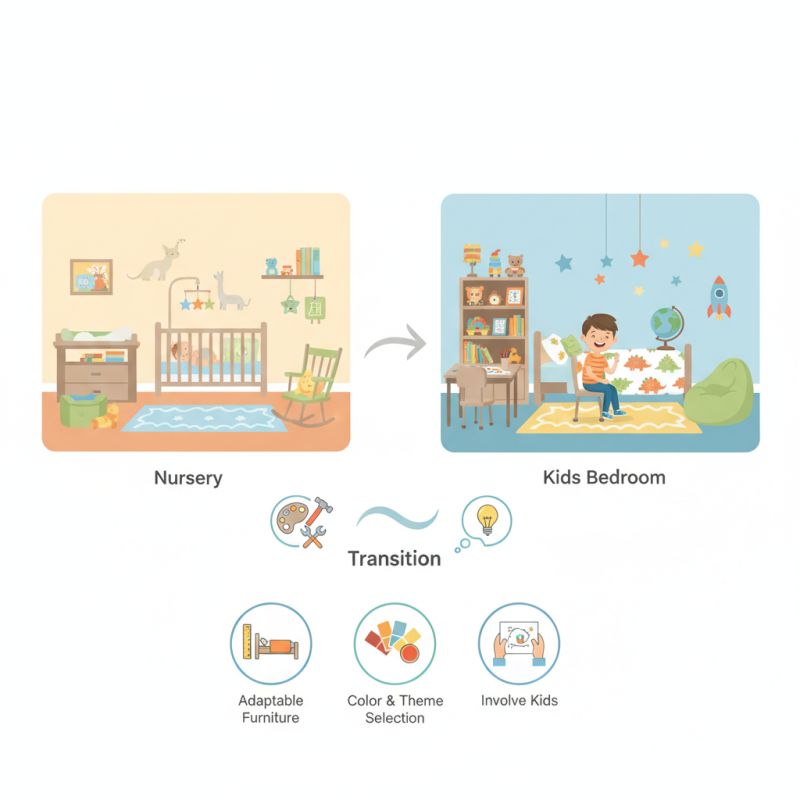
Transitioning your nursery into a kids' bedroom can be an exciting yet challenging process. Assessing your child's needs and preferences is vital. Start by having a conversation with your child. Ask them what colors they like. Discuss their favorite themes or characters. This can make them feel involved and excited about the change.
Consider your child's age. Younger children may need softer, comforting elements. Older kids might prefer a more personalized space. Focus on functionality too. Think about their sleep patterns and play activities. A room should support both rest and play.
**Tip: Use storage wisely.** Incorporate furniture that doubles as storage. Bins and shelves can help keep the room organized.
**Tip: Personalize the space.** Decorate with items that reflect their interests. A bulletin board for artworks can inspire creativity.
Be aware of your child's changing preferences. What they love today may change tomorrow. Adjustments might be needed over time. It is okay to revisit and refresh the space as your child grows. Finding the right balance can be a trial-and-error process.
When transitioning a nursery into a kids' bedroom, choosing the right color palette and theme is crucial. Research from the American Academy of Pediatrics suggests that vibrant colors can stimulate a child’s creativity and cognitive development. Soft pastels tend to create a calming effect, making them fantastic for sleep. Consider hues like soft blues or greens, which are known to promote relaxation.
Incorporating themes can add a personal touch, reflecting your child's interests. A study from the Journal of Environmental Psychology shows that children relate positively to spaces designed around their passions. Whether it’s outer space, animals, or fairy tales, a cohesive theme can enhance their sense of belonging and joy.
Tip: Use washable paint! Kids can be messy, and easy-to-clean walls will save you time.
In addition, remember that balance is key. While bright colors and bold themes can be exciting, too much can overwhelm a small space. Including neutral tones can help anchor the design. Avoid clutter; it can lead to overstimulation and stress. A bedroom should be a haven for rest and creativity.
Tip: Allow your child to pick some elements. Engaging them in the design process fosters independence and personal expression. Keep the focus on their needs for a truly comforting environment.
| Color Palette | Theme | Key Features | Recommended Age Group |
|---|---|---|---|
| Pastel Colors | Fairytale | Castle bed, fairy lights, whimsical decor | 2-5 years |
| Bright Primary Colors | Superhero | Themed bedding, action figures, wall decals | 3-8 years |
| Soft Neutrals | Nature | Wooden furniture, plant motifs, natural materials | 0-5 years |
| Cool Tones | Under the Sea | Marine-themed decorations, soft blues and greens | 3-7 years |
| Vibrant Colors | Space Adventure | Rocket beds, starry night lights, galaxy murals | 5-10 years |
Transitioning from a nursery to a kids' bedroom can be exciting. The right furniture enhances comfort and storage. Look for functional pieces that grow with your child. Consider a bed with built-in storage underneath. This keeps the room tidy and maximizes space.
Bookshelves can be both decorative and practical. Choose one that is easily accessible for your child. It encourages them to take responsibility for their books and toys.
A desk or study area is also essential. It should be simple and comfortable for homework or crafts. Flexibility in design allows it to adapt as your child grows.
Think about your child's preferences too. Bright colors or fun designs can make the room feel inviting. However, balance this with the need for a calm environment. Reflect on how furniture choices impact daily routines. The goal is to create a space that allows for both play and relaxation. Focus on what truly meets your child's needs.
Transforming a nursery into a kids' bedroom is an exciting journey. Personal touches can make the transition feel special. Start with wall decor. Consider colorful paintings or a personalized growth chart. These elements create warmth and can spark creativity. Adding a chalkboard wall offers a playful space for drawing and writing.
Bedding choices are another opportunity for creativity. Select playful patterns or themes that reflect your child's interests. A mix of textures, like soft blankets and fluffy pillows, invites coziness. Consider incorporating family photos or artwork made by your child. This not only adorns the room but also fosters a sense of belonging.
Don't forget the little details. A unique nightlight can add charm. Check for pieces that glow softly, ensuring comfort during bedtime. Spaces often feel incomplete, so keep experimenting with accessories. A well-placed shelf for books can encourage reading habits. Reflect on what resonates with your child and revise as they grow. The room is evolving, just like your child.
Transitioning a nursery into a kids' bedroom is an exciting journey.
Safety and durability should be your main focus. Start by considering furniture.
Choose items with rounded edges to reduce the risk of injury. Look for sturdy beds that can withstand jumping and playing.
A mattress should be firm yet comfortable to support growing bodies.
Next, think about storage solutions. Open shelves are great but can be risky.
Secure heavy furniture to the wall to prevent tipping. Use bins and baskets to keep toys organized.
This reduces clutter, creating a safe play area.
Rugs can add warmth but ensure they have non-slip backing to prevent accidents.
Don’t forget about decor. Wall art can inspire creativity but should be hung securely.
Use durable materials that withstand wear and tear. Remember, kids grow and change quickly,
so keep an eye on what works and what doesn’t. It’s a learning process; the room may evolve as your child does.
Embrace the imperfections and be ready to adjust the space according to their needs.
: Talk to your child about their favorite colors and themes. Let them share ideas to make them feel included.
Look for functional furniture with storage. Items like beds with storage can help keep the room organized.
Choose furniture with rounded edges. Secure heavy items to the wall to prevent tipping and accidents.
Use bins and shelves to organize toys. Open shelves can be risky, so secure them properly for safety.
Personalization makes the room special. Use decor that reflects your child’s interests for inspiration and comfort.
Children’s tastes shift. Be ready to refresh the room as needed. Embrace the ongoing process of adjustment.
Use bright colors and fun designs but also include calming elements. Create a space for both play and relaxation.
Consider a desk for homework and crafts. Ensure the design is flexible to adapt as your child grows.
Select a mattress that is firm yet comfortable. It should support your child's growing body effectively.
Use durable materials for wall art and secure items properly. Decor should inspire creativity without compromising safety.
Transitioning from a nursery to a children's bedroom can be an exciting yet challenging process. Understanding how to transition a nursery to a children’s bedroom involves first assessing your child's evolving needs and preferences. This ensures the new space reflects their personality. Choosing a suitable color palette and theme is essential, as it creates an inviting atmosphere that resonates with your child's interests.
Selecting functional furniture is also crucial, as it provides comfort while maximizing storage efficiency, enabling the room to grow with your child. Incorporating personal touches through decor and accessories allows for creativity and individuality in the space. Finally, ensuring safety and durability in the layout will provide peace of mind as your child explores their new environment. By following these steps, you can create a delightful and functional bedroom that supports your child's growth and development.

ADC Furniture