How to transition a nursery to a children’s bedroom? This question often arrives with a small bed, scattered toys, and mixed feelings. A nursery protects routines, while a children’s bedroom must support independence, movement, learning, and changing emotions. Research from the American Academy of Pediatrics emphasizes safe sleep spaces and careful room sharing during infancy. Its guidance remains an essential starting point, even when a child is ready for greater independence.
Dr. Rachel Moon, a leading pediatric sleep expert, states, “The safest place for an infant to sleep is on a separate sleep surface designed for infants, in the parents’ room.” This advice, published in the AAP’s 2022 safe-sleep policy, reminds families not to rush the move. The transition should follow development, not decoration trends. The U.S. Consumer Product Safety Commission also reports that furniture tip-over risks remain a serious household concern. Therefore, anchor wardrobes, secure drawers, and keep cords away from the bed.
Industry research supports this broader view. Grand View Research’s children’s furniture market report identifies safety, adaptable design, and space efficiency as major purchasing priorities. These priorities matter in China’s urban homes, where bedrooms may need to hold a bed, books, storage, and a study corner. A low shelf, washable rug, and warm reading lamp can make the room feel inviting. Still, no plan is perfect. Some children resist the change, and parents may misjudge readiness. A gradual routine, familiar bedding, and the child’s participation can reduce that pressure while creating a safer, more personal bedroom.
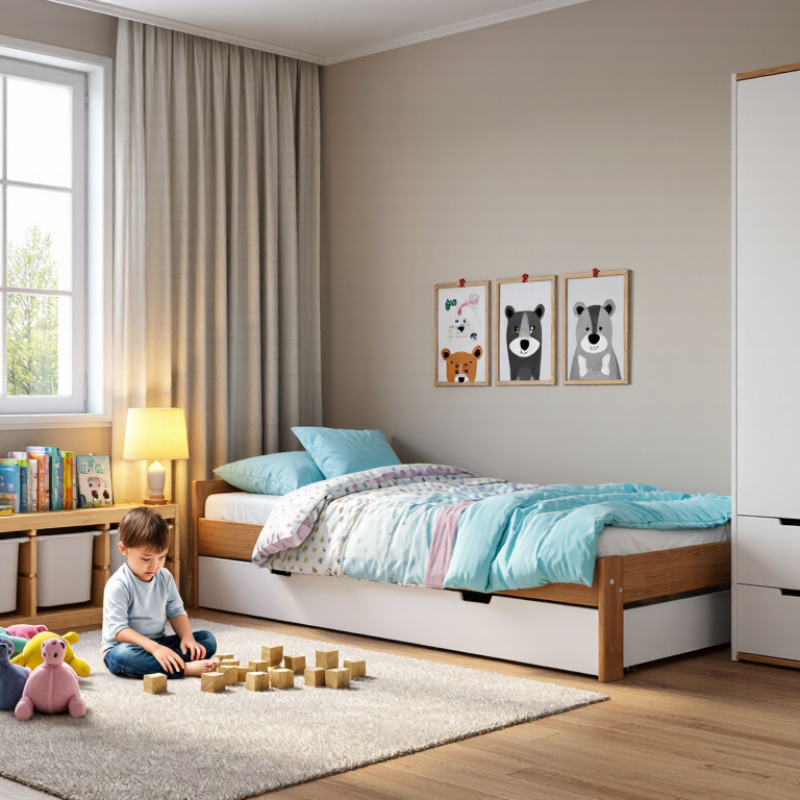
A nursery is ready for a child’s bedroom when safety, sleep, and independence align. Age alone is not enough. Watch for climbing attempts, repeated requests for a “big-kid” bed, and calm settling after nighttime waking. The American Academy of Pediatrics’ 2022 sleep guideline recommends 11–14 hours daily for children aged one to two, including naps. Children aged three to five need 10–13 hours. A rushed move can quietly damage that rhythm.
Check the room at your child’s eye level. Can they open the door, reach a window, or climb a dresser? Anchor every tall unit, secure blind cords, cover unused outlets, and keep the mattress low. The U.S. Consumer Product Safety Commission’s safety guidance highlights furniture tip-over prevention as an essential child-protection measure. Use a night-light with warm, dim light. Avoid loose pillows and heavy blankets for younger children. Small details matter.
The World Health Organization’s 2019 guidelines advise no sedentary screen time for children under two, and no more than one hour for ages two to four. Keep tablets and televisions outside the bedroom when possible. A predictable room may work better than an impressive one. Let your child choose one sheet or soft toy, but avoid filling the bed. I have found that adults often overestimate readiness after one successful night. A two-week trial, with the nursery available as a fallback, is more honest. If bedtime becomes prolonged, pause and reassess.
Assessing when your nursery may be ready to become a kids' bedroom
The chart shows the CDC developmental milestone checkpoint associated with each independence skill. These milestones can help families assess readiness, but age alone should not determine the transition. Before moving to a bed, also confirm that furniture is anchored, windows are secured, cords are out of reach, and the child can follow basic safety instructions.
Reference: U.S. Centers for Disease Control and Prevention, developmental milestones at 18 months, 2 years, 30 months, and 3 years. Milestones are general developmental guidelines, not a medical or safety guarantee.
How to Transition a Nursery to a Kids Bedroom China Top 10
Planning a Safe and Functional Bedroom Layout for Growing Children
A nursery-to-bedroom transition should begin with movement, not decoration. Measure the room, window position, radiator, sockets, and door swing. Leave a clear route from the bed to the exit. The U.S. Consumer Product Safety Commission reports that furniture tip-overs cause thousands of emergency-room injuries among children each year. Anchor wardrobes, dressers, and bookcases to the wall. Avoid placing climbable furniture beside windows. Window coverings should use cordless designs, because strangulation risks remain a serious household concern.
Design for the child’s next five years, not only today. A low bed supports independence, while adjustable storage can hold changing clothing sizes and school supplies. Keep daily items between shoulder and waist height. Store toys in open, lightweight containers. Heavy books belong on lower shelves. The Environmental Protection Agency recommends indoor humidity between 30% and 50%, so ventilation and a simple humidity monitor are practical additions. Soft lighting near the bed helps reading, but keep lamps away from curtains and bedding.
I have found that children need empty floor space more than extra furniture. It is easy to over-plan. Use washable, low-emission materials, and check safety instructions before installation. The American Academy of Pediatrics advises securing cords and removing small hazards from children’s reach. Reassess the layout every six months. Children grow unevenly, and yesterday’s safe arrangement may become tomorrow’s climbing route.
| No. | Planning Dimension | Recommended Benchmark | Why It Matters | Practical Transition Action |
|---|---|---|---|---|
| 1 | Room Zoning | Divide the room into four functional zones: sleeping, dressing, playing, and learning. Keep the primary walking route unobstructed. | Clear zones help children understand routines and reduce clutter around the bed and doorway. | Mark each zone on a simple floor plan before moving furniture. Place the bed in the quietest area and keep active play away from windows and heaters. |
| 2 | Bed Transition | Use a properly fitted child or single bed with a firm mattress. Leave enough space for the child to enter and exit safely on the open side. | A stable sleep surface and an easy exit reduce falls, trapped gaps, and nighttime obstacles. | Replace the cot when the child can climb out or has outgrown it. Check that the mattress fits the frame without significant gaps. |
| 3 | Walking Clearance | Aim for approximately 75–90 cm of clear circulation space on the main route. Keep drawers and doors from blocking this path when open. | Adequate clearance supports safe movement, cleaning, dressing, and emergency access. | Use removable tape to test door swings, drawer openings, and the route from the bed to the bedroom door before final installation. |
| 4 | Furniture Stability | Anchor wardrobes, dressers, bookcases, and other tall furniture to the wall using suitable anti-tip hardware. | Unsecured furniture can tip when children climb, pull drawers, or hang on shelves. | Install wall anchors according to the furniture and wall construction. Keep heavy items in low drawers and avoid climbable furniture beside the bed or window. |
| 5 | Window and Blind Safety | Keep beds, chairs, and climbable storage away from windows. Use window restraints where appropriate and cordless window coverings. | This reduces the risk of falls and prevents children from becoming entangled in operating cords. | Move climbable furniture away from the window area and check that window locks or restrictors function correctly. Keep blind cords inaccessible. |
| 6 | Lighting Plan | Provide layered lighting: general ceiling light, task lighting for reading or homework, and a low-level night-light. Use warm light around 2700–3000 K for bedtime areas. | Layered lighting supports play, reading, dressing, and nighttime orientation without excessive glare. | Place the reading light beside the desk or bed, conceal cables, and choose fixtures that do not become hot to the touch during normal use. |
| 7 | Electrical Safety | Keep sockets, power strips, and charging cables out of reach where possible. Use tamper-resistant outlets or approved safety covers where needed. | Accessible electrical points can create shock, burn, and strangulation hazards. | Route cables behind furniture or through cable management channels. Do not place chargers under bedding, and unplug portable appliances when not in use. |
| 8 | Storage Accessibility | Place everyday clothes, toys, and books within the child’s reach. Store occasional-use and heavier items in higher or lower secured areas. | Accessible storage encourages independence while reducing the need for climbing or unsafe reaching. | Use low baskets, open shelves with rounded edges, and labeled sections. Limit the number of toys on display to maintain a clear floor. |
| 9 | Materials and Air Quality | Choose durable, wipeable, low-odor finishes and washable textiles. Maintain ventilation and control indoor humidity to help prevent mold growth. | Children spend many hours in the room, so easy-clean surfaces and good ventilation support a healthier environment. | Air out newly installed furniture and freshly painted surfaces before regular use. Repair damp areas promptly and wash bedding according to care instructions. |
| 10 | Growth and Adaptability | Select adjustable or modular furniture that can support changing needs from early childhood through school age. | Flexible furniture reduces replacement costs and allows the room to evolve as the child grows. | Prioritize an adjustable desk, movable storage, and neutral long-lasting finishes. Keep at least one area flexible for future study, hobbies, or additional storage. |
Transitioning a nursery into a children’s bedroom requires flexibility, not a complete replacement. Choose a bed that supports growing bodies and allows future changes. Adjustable height can improve safety for younger children. Later, a wider frame may provide more sleeping space. Select rounded edges and stable construction. I have found that neutral furniture lasts longer than themed pieces. Children quickly outgrow cartoon designs. Still, a small personal detail can make the room feel theirs.
Storage should be easy for children to use independently. Place open baskets near the floor for toys and books. Add labeled drawers for clothes, art supplies, and bedding. Keep heavier items below shoulder height. A narrow shelf can display favorite objects without crowding the room. Lighting needs several layers. Use soft ceiling light for general visibility, a focused reading lamp, and a gentle night-light. Avoid exposed bulbs and loose cables. Natural light is helpful, but blackout curtains can support better sleep.
Tips: Measure every wall before buying furniture. Leave clear walking paths around the bed. Test drawer handles at a child’s height. Choose washable rugs and removable covers. Décor should add warmth without creating clutter. Try one change at a time. My first room plan included too much storage and felt cramped. A simpler layout worked better. Review the room every few months as habits, interests, and safety needs change.
Moving from a nursery to a kids bedroom is more than changing furniture. It changes familiar sleep signals. Begin with a predictable evening rhythm: bath, pajamas, two short stories, and the same quiet phrase. Keep bedtime and wake-up times similar, including weekends. Consistency helps a child’s body clock adjust gradually.
Let your child participate in small decisions. They might choose between two sheets, place a favorite toy near the pillow, or help arrange a night-light. Keep the room calm, comfortable, and free from distracting screens before bed. Child sleep specialists commonly recommend a soothing wind-down period of about 20 to 30 minutes. The exact timing may vary.
Expect resistance. Stay patient.
If your child leaves the room, return them calmly without starting a long conversation. Repeat the same response each time. A simple, “Your bed is safe, and it is sleeping time,” can feel reassuring. Our first transition plan may fail when the room feels too unfamiliar. That is useful information, not a parenting failure. We may need to shorten the routine, add a familiar blanket, or sit nearby for several nights. Avoid promising that fear will disappear immediately. Accepting the new room can take days or weeks, especially after illness, travel, or family changes. Notice small progress, such as staying in bed for ten minutes longer, and mention it warmly the next morning.
Moving a nursery into a children’s bedroom works best when comfort changes gradually. In my room-planning experience, children often resist sudden furniture changes.
China’s top ten essentials include:
Check current Chinese safety requirements before buying furniture or bedding.
Measure the room carefully.
Leave clear walking space around the bed, and anchor tall storage to the wall. Choose rounded edges and non-toxic, low-odor finishes. A dimmable lamp can reduce nighttime fear, while a small basket keeps favorite toys within reach. Keep cords, loose decorations, and heavy objects away from the sleeping area. The mattress should fit tightly, without dangerous gaps.
Our first plan used too many open shelves. It looked attractive, but cleaning became difficult and toys created tripping hazards.
A simpler layout worked better. Let the child choose one pillowcase or wall picture, not every decoration.
Spend several evenings reading in the new room before changing sleep arrangements. Some children need more time. That is normal, and the room may need adjustment after real use.
Begin when movement needs change, not when decorations look outdated. Measure the room first. Children need clear paths and floor space.
Measure every wall, window, radiator, socket, and door swing. Mark the exit route from the bed. Check furniture depth, too.
Secure wardrobes, dressers, and bookcases to the wall. Use stable furniture with rounded edges. Keep climbable pieces away from windows.
Choose a low, stable bed for easier independence. Adjustable height can support younger children. A wider frame may help later.
Keep daily items between shoulder and waist height. Place toys and books in open baskets near the floor. Store heavy books below.
Use soft ceiling lighting, a focused reading lamp, and a gentle night-light. Keep lamps away from curtains and bedding. Secure every cable.
Natural light is useful during the day. Blackout curtains may reduce nighttime brightness. Maintain indoor humidity between 30% and 50%.
Recheck the room every six months, or sooner after major growth. Yesterday’s safe setup may become a climbing route. I once added too much storage. The room felt cramped.
How to transition a nursery to a children’s bedroom? The process begins by recognizing whether your child is ready for greater independence, such as showing interest in a larger bed, improved nighttime habits, or a need for more play and learning space. A successful transition should combine emotional preparation with practical planning. Create a safe, flexible layout with clear walking areas, secure furniture, child-friendly materials, and enough room for sleeping, playing, reading, and dressing.
Choose adaptable furniture, accessible storage, comfortable lighting, and décor that can grow with your child’s changing interests. Gradually update bedtime routines, involve your child in selecting colors or organizing belongings, and explain the change positively to build confidence. China Top 10 essentials for a smooth nursery-to-bedroom change include a suitable bed, mattress, protective safety features, versatile storage, soft lighting, washable textiles, organized clothing space, a cozy reading area, age-appropriate décor, and consistent family support.

ADC Furniture